
Upright, and Never Straight
On walking as biology and performance.

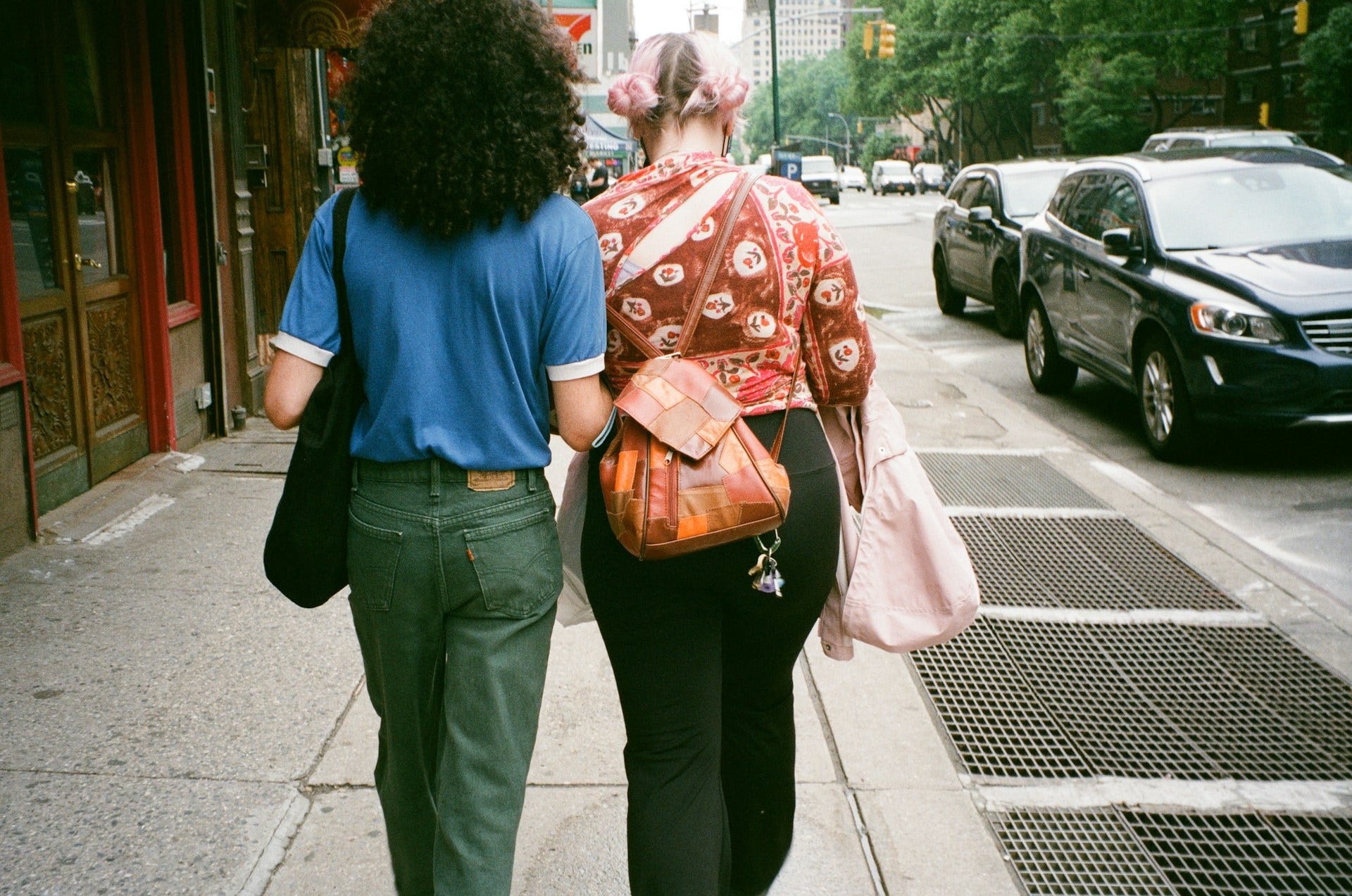
It was never just about standing up. Bipedalism, that fateful evolutionary gamble, was less a triumph of nature than a rearrangement of inconveniences. Darwin noted the peculiar split in The Descent of Man, pointing to our vertical posture as the feature that separated us from the apes we resemble. And yet to walk on two legs is not only to differentiate ourselves but to bind ourselves to a particular fate. A recent Nature study by Terence Capellini and Gayani Senevirathne tracks this destiny down to the embryo. There, the ilium—the broadest bone of the pelvis—forms in a way no other mammal’s does: a bar of cartilage placed perpendicular to the spine. One turn of the axis, one reorientation of tissue, and a whole anthropology unfolds.
The ilium, in this story, is both structure and symbol. It is what allows us to carry our weight forward and upward, and also what had to contort again to accommodate the swollen skulls of our offspring. Walk, balance, give birth. Repeat. The posture is not neutral. It costs. It signals. It dictates how much space you occupy, how you negotiate pain, how you register yourself in relation to others.
We say “standing tall” as if height were virtue. We say “walk straight” as if rectitude were biological. But already the body betrays the metaphor. Soldiers are drilled to march upright with shoulders pinned back, while models are taught to glide on the runway with the pelvis slightly tilted, a different choreography of balance. Both exploit the same evolutionary baseline, and both re-inscribe posture with meaning. The body becomes a billboard: not merely bipedal but curated, codified, disciplined.
What the Nature study uncovers is that the ilium’s transformation is not only ancient but ongoing. First, the turn of the cartilage, a radical perpendicular gesture in the embryonic frame. Later, the remodeling of the pelvic canal to usher in heads swollen with cortex. A sequence of anatomical improvisations, each with cultural consequences. To walk upright is already to bend to necessity.
But the moment one calls it upright, one is also invoking a moral economy. Anthropologists know that posture codes hierarchy. Among the Samburu of Kenya, bodily comportment signals deference or authority: lowered shoulders, averted gaze. In Confucian traditions, bowing was ritualized submission. In New York, posture is street theater. The hunched commuter, spine buckled by laptops and deadlines, broadcasts fatigue and defeat. The swaggering finance bro, chin tilted up as though the avenues were designed for him, announces entitlement. And then there are the aging flâneurs, trying to hold on to grace, their bodies remembering an earlier elasticity even as gravity insists otherwise.
The catwalk is only the most crystallized form of this grammar. Models must train in the “walk,” a choreography that bends the evolutionary baseline into aesthetic law. Feet placed one in front of the other, shoulders relaxed but present, gaze unfazed. It is not bipedalism but its stylized cousin, a monetized poise. The military march is another: mechanical, synchronized, making bodies interchangeable. Both depend on upright locomotion, but neither is reducible to biology. The ilium turns, cartilage hardens, and culture takes it from there.
If anthropology teaches anything, it is that the body is never merely natural. The pelvis is an archive of compromises—mobility traded for obstetrics, balance recalibrated against endurance. But the posture that follows is always read, always judged. A stoop is not simply scoliosis; it is coded as weakness, melancholy, even failure. An erect spine is not only the outcome of physical training; it is aspirational, a moralized stance.
This is why posture haunts the city. On the subway, the crooked figure taking up less space than the ad behind them; on Wall Street, the suit cutting a line through the crowd as if propelled by destiny. We read these bodies because we have been trained to. Posture becomes résumé, prophecy, indictment. To slouch is to betray ambition, to stand tall is to signal resilience, to walk with the chin lifted is to claim ownership of the sidewalk. We cannot help but interpret.
But the interpretations are arbitrary, and often cruel. Pain, injury, exhaustion—all are read as failure of will. The anthropology of posture reveals this violence. Bipedalism makes us vulnerable: to injury, to scrutiny, to misrecognition. It grants mobility and exacts penalties. The ilium bears weight, but the spine bears judgment.
And yet, within this arbitrariness, there is possibility. To move differently, to refuse rectitude, to allow the body to drift out of its assigned meanings—that too is an inheritance of bipedalism. We can walk crooked, sideways, slowly. We can let the ilium do its ancient work without turning it into a moral code. Upright is not always straight, and perhaps survival lies in that small, imperfect angle.