
Christmas Day
On Christmas, Broken People, and the City That Doesn’t Pause.

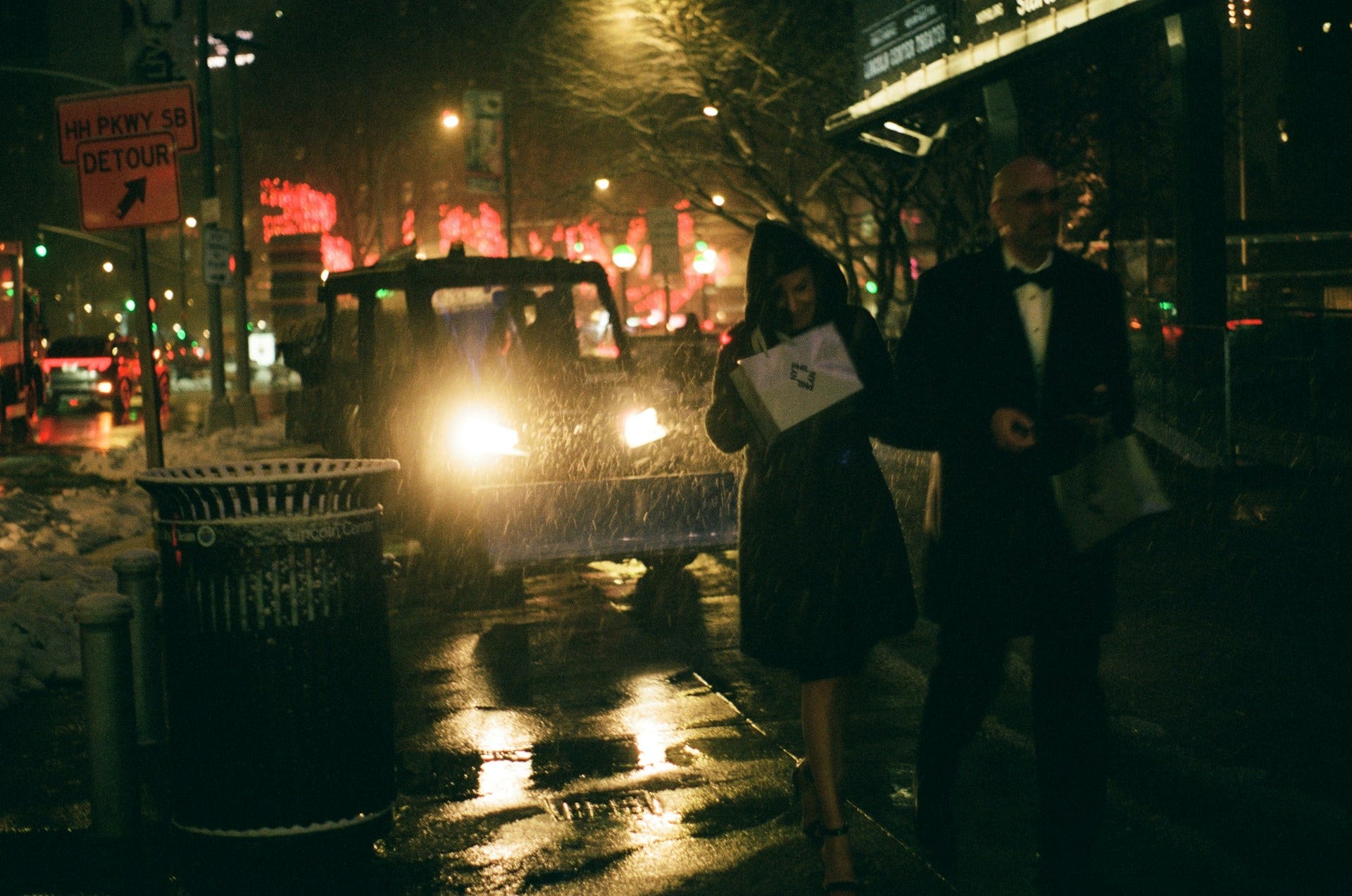
Christmas Day in New York is a study in managed disappointment.
That sentence already violates the holiday’s basic contract, which promises warmth, reunion, and a legible kind of joy. Christmas, as represented in American popular culture, is a choreography of arrivals: people come home, estranged relatives soften, the city glows rather than glares. Anthropologically speaking, it is a classic ritual of reintegration, a moment when social fractures are supposed to close, or at least pause. Victor Turner would have called it communitas: a temporary suspension of hierarchy in favor of shared feeling. New York, however, is not a place that suspends itself easily.
What actually happens on Christmas Day here is something stranger and, frankly, more interesting. The city thins out but does not disappear. Trains run on reduced schedules like a half-hearted concession to sentiment. Delis stay open, staffed by men who learned long ago that American holidays are other people’s rituals. Sirens still sound, but more sparsely, as if even emergencies are observing the occasion with restraint. The city becomes an ethnographic diagram of absence: who left, who stayed, and who never had anywhere else to go.
The dominant Christmas fantasy—derived from mid-century cinema, advertising, and later television—assumes a stable “elsewhere.” Home exists. Family exists. The subject’s problem is distance, not rupture. Lévi-Strauss, in his essay on Santa Claus, noted that modern Christmas functions as a myth designed to reconcile adults with a system they know is false but need to keep operational. New York exposes the machinery. Many people here are not far from home; they are far from the idea of home itself. Or worse, they are close to it and do not want to be.
So Christmas becomes a ritual for people who would rather be somewhere else while insisting, quietly, on staying put. This is not hypocrisy; it is structure. New York’s Christmas is full of individuals performing what Erving Goffman would call “face-work” under impossible conditions. You go to a friend’s apartment for dinner while imagining another table, another version of yourself, a cleaner narrative. You complain about the food, the smallness, the effort, and then feel a sudden, unwanted tenderness when someone pours you a second drink without asking.
Anthropology has long understood ritual as a technology for managing contradiction. Christmas in New York does not fail at this; it simply refuses to resolve it. The city specializes in liminality without exit. Turner imagined liminality as a passage between stable states. New York turns it into a permanent address. On Christmas Day, this becomes visible. The people who stay are not necessarily the most committed to the holiday; they are often the least able, or least willing, to perform its fiction elsewhere.
There is humor in this, much of it cruel. The Jewish-Chinese restaurant complex, often celebrated as quirky multicultural harmony, is also a survival strategy disguised as tradition. It works because it lowers the stakes. No one pretends it is anything but a workaround. Compare that to the tragic earnestness of the Christmas dinner party, where every burnt roast and awkward silence carries symbolic weight. Claude Lévi-Strauss again: rituals become dangerous when they are overburdened with meaning. New York Christmas is heavy with it, and everyone knows it.
Yet there is tenderness here too, unexpected and therefore harder to commodify. A city that monetizes intimacy year-round briefly allows small, unspectacular gestures to count. A bartender remembering your name. A neighbor shoveling the sidewalk without comment. A text message that says only, “You good?” These are not redemptive acts, but they are real. Marcel Mauss would recognize them as gifts in the strict sense: exchanges that create obligation without accounting. They do not fix anything. They make endurance possible.
The key misunderstanding is that Christmas is supposed to make people whole. In New York, it does something else. It acknowledges brokenness without repairing it. The city does not gather around the tree; it circles the fact that the tree is a prop, a borrowed symbol imported from somewhere more settled. People participate while withholding belief. They mock the holiday even as they cook for it. They fantasize about escape while staying seated.
This double movement—wanting to be elsewhere and wanting, stubbornly, to be exactly here—is not a fiasco of Christmas but its local adaptation. New York has always been a city of incomplete arrivals. Immigration, migration, ambition, refusal: the city is built on people who came for something and found something else. Christmas Day simply concentrates that condition into twenty-four hours, strips away the distractions, and lets the structure show.
No movie knows how to represent this. Films require resolution. Advertisements require innocence. New York’s Christmas offers neither. It is a ritual without transcendence, a holiday that does not heal but does hold. Briefly. Awkwardly. Enough.
And when the day ends, and the subways resume their regular cruelty, and the lights start to feel like clutter again, something small remains. Not hope in the sentimental sense. More like recognition. You were here. Others were too. That counts, not much, but it counts.
Thank you for reading this newsletter over the past year—for your time, your attention, and your patience. I hope you have a gentle Christmas, a bearable and maybe even good last week of the year, and a beginning to the next that feels generous rather than demanding. Wherever you are, and however you’re marking it, may there be at least one quiet moment that feels like yours. See you on the other side.